


Sustainable Soccer Gear for Teams and Families: Why Buying Less, More Durably, Is the Real Win
Recent post
Last spring, a parent on the sideline mentioned she'd bought her daughter three pairs of cleats in one season. Not because the kid's feet grew that fast — because the first two pairs fell apart. That's not a budget problem. That's a durability problem wearing a budget problem's clothes.
When people talk about sustainable sportswear, the conversation almost always goes straight to recycled materials and supply chain ethics. Those things matter. But they don't help a coach outfitting 15 kids on a team budget, or a family that's already replaced cleats twice before November. For most soccer families, the most sustainable choice is simply the one that lasts the whole season — and doesn't need replacing before the spring tournament.
That reframe changes how you shop. Here's what to actually look for.
Cleats: The Gear That Gets Replaced Too Often
Cleats take the most abuse of any piece of soccer equipment. They're kicked into the ground, soaked in mud, crammed into bags, and worn through practices and games alike. The ones that fall apart early almost always fail in the same places: the upper separates from the sole, the stud plate cracks, or the lining shreds before the outsole wears down.
What holds up? A few things to check before buying:
- Upper construction — Look for a smooth, reinforced synthetic upper rather than thin mesh panels that can tear. The toe box takes the most contact during striking, so it needs to be solid.
- Stud configuration — Firm ground cleats with molded studs (rather than detachable ones) tend to be more durable for recreational and youth play. Fewer moving parts means fewer failure points.
- Ankle collar — A padded collar keeps the shoe on the foot and reduces the stress on the heel lining during lateral cuts.
The Vizari Liga Firm Ground Striker Soccer Shoes are a good example of this kind of construction. The black and royal blue upper is smooth synthetic, the studs are molded into a firm ground outsole, and the build is designed for the kind of repeated use that recreational and competitive youth players put gear through weekly.
For younger players, the Vizari Infinity Youth Firm Ground Soccer Cleats in White/Black follow the same logic — a compact, rounded stud pattern on a white and black upper built for smaller feet that are still developing their stride. The dimpled texture across the upper adds grip on the ball without thinning out the material. Available in multiple colorways including pink/black, green, and orange, so kids actually want to wear them.
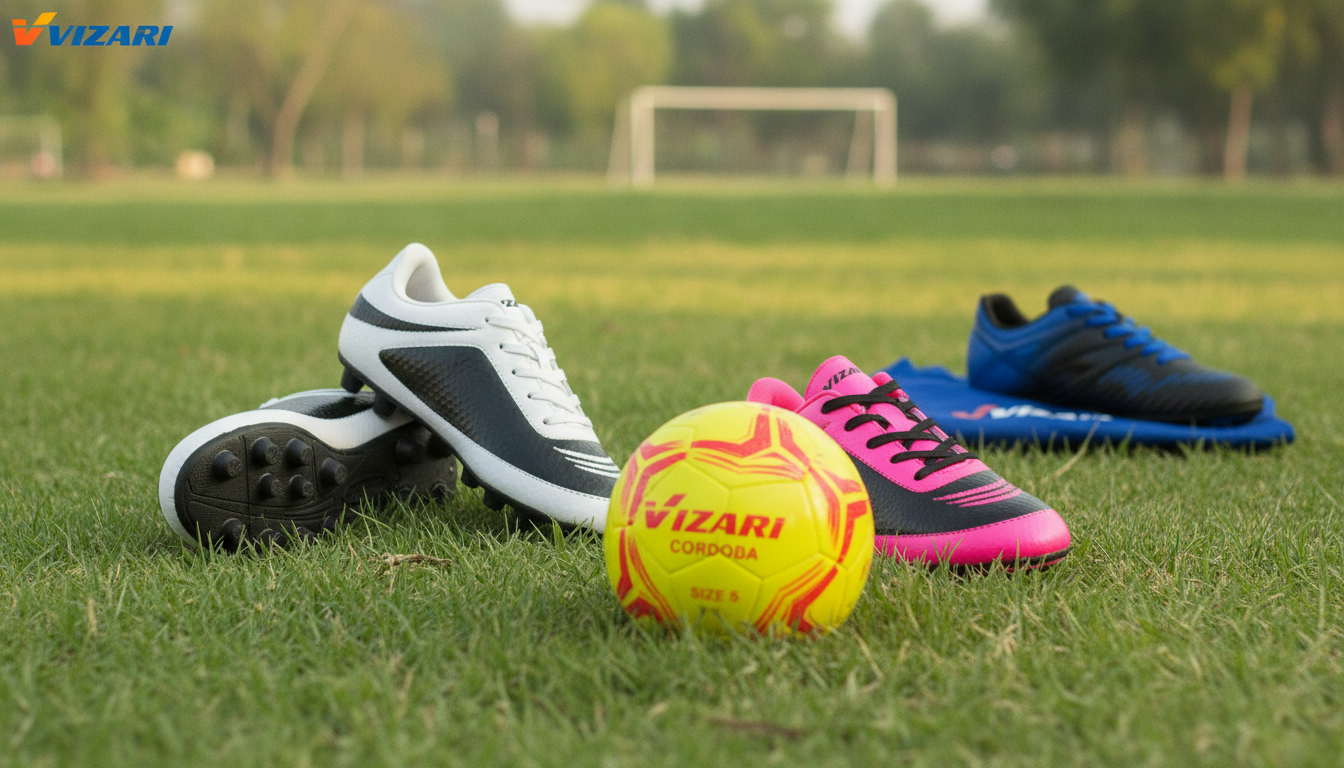
The Vizari Sports Infinity Firm Ground Soccer Shoes in Pink/Black use the same platform in a bold pink and black colorway — important to mention because gear kids are excited to wear gets taken care of better. That's not a small thing when you're trying to get a full season out of a pair of cleats.
Balls: The Piece Everyone Underbuys
A soccer ball is the one piece of equipment that gets used every single session — warm-ups, drills, scrimmages, backyard practice. And yet it's often the last thing families invest in, which is why so many balls end up waterlogged, misshapen, or cracked after a few months.
What makes a training ball durable? Consistent air retention matters most — a ball that can't hold pressure becomes unusable fast, and it usually means the bladder or valve quality wasn't there to begin with. The outer panel material also determines how the ball holds up to hard surfaces and wet conditions.
The Vizari Cordoba Soccer Ball (Size 5) has a high-gloss yellow and deep red panel design that's easy to track in low light — useful for late-afternoon practices when the sun drops fast. Beyond the look, it's built as a training-grade ball meant to handle regular use across different surfaces. For teams doing daily work, having a ball that doesn't need constant re-inflation or replacement mid-season is exactly the kind of durability that adds up over time.
The Team Budget Angle: Buy Once, Not Three Times
Coaches and team managers face a version of this problem at scale. When you're ordering cleats or balls for a full roster, every dollar matters — but so does the cost of replacing gear mid-season. Gear that's cheap upfront but falls apart in eight weeks ends up costing more than mid-range gear that lasts the full year.
The practical rule: prioritize construction quality in cleats (where failure is most common and most disruptive) and don't go to the very bottom of the price range on match balls. Training balls can be more basic, but match balls should hold their shape and pressure through a full game schedule.
Vizari's lineup is designed to sit in that useful middle — affordable enough to outfit a team without blowing the budget, built well enough that you're not replacing things before the season ends. You can browse the best sellers collection to see what's moving for teams and families right now, or check the soccer ball collection if you're stocking up on training gear specifically.
A Few Things That Don't Actually Matter as Much as You Think
Brand logos. Colorways that match the pro teams. The exact same cleat model your kid saw on social media. None of these affect whether the gear holds up through a season. Fit, construction, and appropriate surface type (firm ground vs. turf vs. indoor) matter far more than any of that.
Getting the surface type right is especially worth emphasizing. Firm ground cleats on artificial turf wear down faster and give you less traction than they should. Turf shoes on natural grass don't grip the way molded studs do. Buying the right cleat for the surface your team actually plays on is one of the simplest ways to extend the life of the shoe.
Sustainability in soccer gear isn't a certification — it's a decision made at the point of purchase. Buy gear that fits the surface, fits the foot, and is built to last a season. Do that consistently, and you'll spend less, waste less, and spend more time on the field instead of the checkout page.
Shop Vizari's durable soccer gear built to go the distance →
Frequently Asked Questions
What's the difference between firm ground and turf soccer cleats?
Firm ground cleats have longer, molded studs designed to penetrate natural grass and provide traction on outdoor fields. Turf shoes have shorter, more numerous rubber studs or a textured outsole suited to artificial turf surfaces. Using the wrong type for your surface accelerates wear and reduces performance — so it's worth getting this right before buying.
How do I know if a soccer ball is good quality before buying?
Look for a ball that specifies its intended use (training vs. match), the panel construction, and whether it has a quality bladder for air retention. A ball that loses pressure quickly or becomes misshapen after a few weeks is a sign of poor bladder or valve quality. For regular training, a durable machine-stitched training ball will outlast a cheap promotional ball every time.
How long should a pair of youth soccer cleats last?
A well-made pair of youth cleats used on the correct surface should comfortably last a full season of regular practice and games. The most common failure points are the upper separating from the sole and the inner lining breaking down — both signs of lower construction quality. Buying a size with a little room to grow is fine, but avoid going too large, as poor fit puts extra stress on the shoe's structure.
Is it worth buying separate cleats for practice and games?
For competitive players who train daily, having a dedicated pair for matches can extend the life of both pairs significantly. For recreational youth players with one or two sessions a week, a single quality pair used consistently is usually sufficient for a full season. The bigger priority is matching the cleat type to the surface, not necessarily having two pairs.
Related News

Soccer Training in the Off-Season: How to Build a Running Base Without Buying a Second Wardrobe
Every fall, the same thing happens. The season ends, the coach says "stay fit over the break," a...

The Parent's Guide to Buying Soccer Shin Guards That Actually Stay On
Your kid comes off the field after the first game, shin guard dangling from the sock sleeve, the...

The Silk Sleep Mask as a Mental Fitness Tool: Why Darkness and Stillness Belong in Your Wind-Down Stack
You've done the breathwork. You've silenced your phone. You've maybe even lit a candle. But the ...

Do Girls Need Different Soccer Cleats Than Boys? What the Fit Differences Actually Mean
Every season, the same thing happens. A parent walks into a soccer store (or opens a browser tab...

5 Reasons Soccer Apparel and Gym Clothes Are Not the Same Thing (Even When They Look It)
You've done it. Thrown on a pair of gym shorts and a dry-fit tee for a pickup game because your ...