


Soccer Training in the Off-Season: How to Build a Running Base Without Buying a Second Wardrobe
Recent post
Every fall, the same thing happens. The season ends, the coach says "stay fit over the break," and suddenly you're standing in a sporting goods store buying running shorts, a moisture-wicking long-sleeve, and a jacket you'll wear exactly twice before the spring schedule kicks back in.
If you already own a decent soccer kit, there's a good chance you're doubling up on gear you don't need. Soccer training apparel and running apparel overlap more than most people realize — but not completely. Knowing where the line is will save you money and closet space.
Start With What You Already Have
Open your kit bag and pull out what's in there. Most recreational and youth players are sitting on at least a few pieces that translate directly to road running or track work:
- Training shorts: If they're lightweight and have a built-in liner or compression layer, they'll work fine for runs up to an hour. Soccer training shorts are cut for lateral movement, which means they're not going to bunch or restrict your stride.
- Moisture-wicking training tops: A basic polyester training jersey or performance tee pulls sweat away from your skin the same way a running-specific top does. The fit might be slightly looser, but for casual off-season runs, that's not a problem.
- Lightweight track pants or warm-up bottoms: These are genuinely dual-purpose. If you train in them for pre-match warm-ups, they'll handle a 30-minute easy run without complaint.
- Soccer socks: This one surprises people. Tall soccer socks provide solid calf compression and cushioning. For shorter runs, they're perfectly fine. For longer distances, some runners find them too warm — but that's a comfort preference, not a performance issue.
The point isn't that soccer gear is secretly running gear. It's that performance athletic wear is performance athletic wear — and buying a second set of nearly identical items because the label says "running" is a marketing win for someone else, not a fitness win for you.
Where Soccer Gear Genuinely Falls Short
There are a few spots where the crossover breaks down, and it's worth being honest about them.
Cleats on pavement. This is the obvious one, but it needs saying: do not run road miles in cleats. The studs aren't designed for hard, flat surfaces, and the lateral stability built into cleat construction works against the forward-motion mechanics of running. If you're doing off-season runs outside, you need a pair of running shoes or cross-trainers — full stop.
Goalkeeper gloves and padded gear. Leave these in the bag. They serve no function on a run and will just make you uncomfortable.
Heavy training jerseys or thick cotton warm-up tops. Some older or budget training kits use heavier fabrics that trap heat and hold moisture. If your training top feels damp and heavy after a hard session, it's going to feel worse on a sustained run. Swap it for a lighter layer.
Compression shorts designed for high-impact lateral cuts. These work well for soccer but can feel restrictive during longer runs where your stride pattern is more repetitive. If you notice chafing or tightness after 20 minutes of running, that's the gear telling you something.
The One Piece Worth Buying (If You Don't Already Have It)
If there's a genuine gap in most soccer players' off-season kit, it's a lightweight, packable outer layer — something windproof enough to handle a cold morning run but light enough to tie around your waist when you warm up. Most soccer warm-up jackets are either too bulky for running or too thin for real cold-weather use.
A simple running jacket or a lightweight training top with a bit of wind resistance fills that gap without breaking the bank. Everything else — shorts, base layers, socks, training pants — you've probably already got covered.
Building the Running Base: What Actually Matters
Gear aside, here's the practical side of off-season running for soccer players. The goal isn't to become a distance runner. It's to maintain the aerobic base you built during the season so you're not starting from scratch in February.
Two or three runs per week is enough. Keep most of them easy — a pace where you can hold a conversation. Throw in one slightly harder effort per week, whether that's a tempo run, some hill repeats, or a set of short intervals. Soccer fitness is built around repeated short bursts, so pure long slow distance isn't the whole picture.
Consistency over the off-season matters more than any single workout. The players who show up to pre-season in good shape aren't the ones who trained hardest in December — they're the ones who trained regularly.
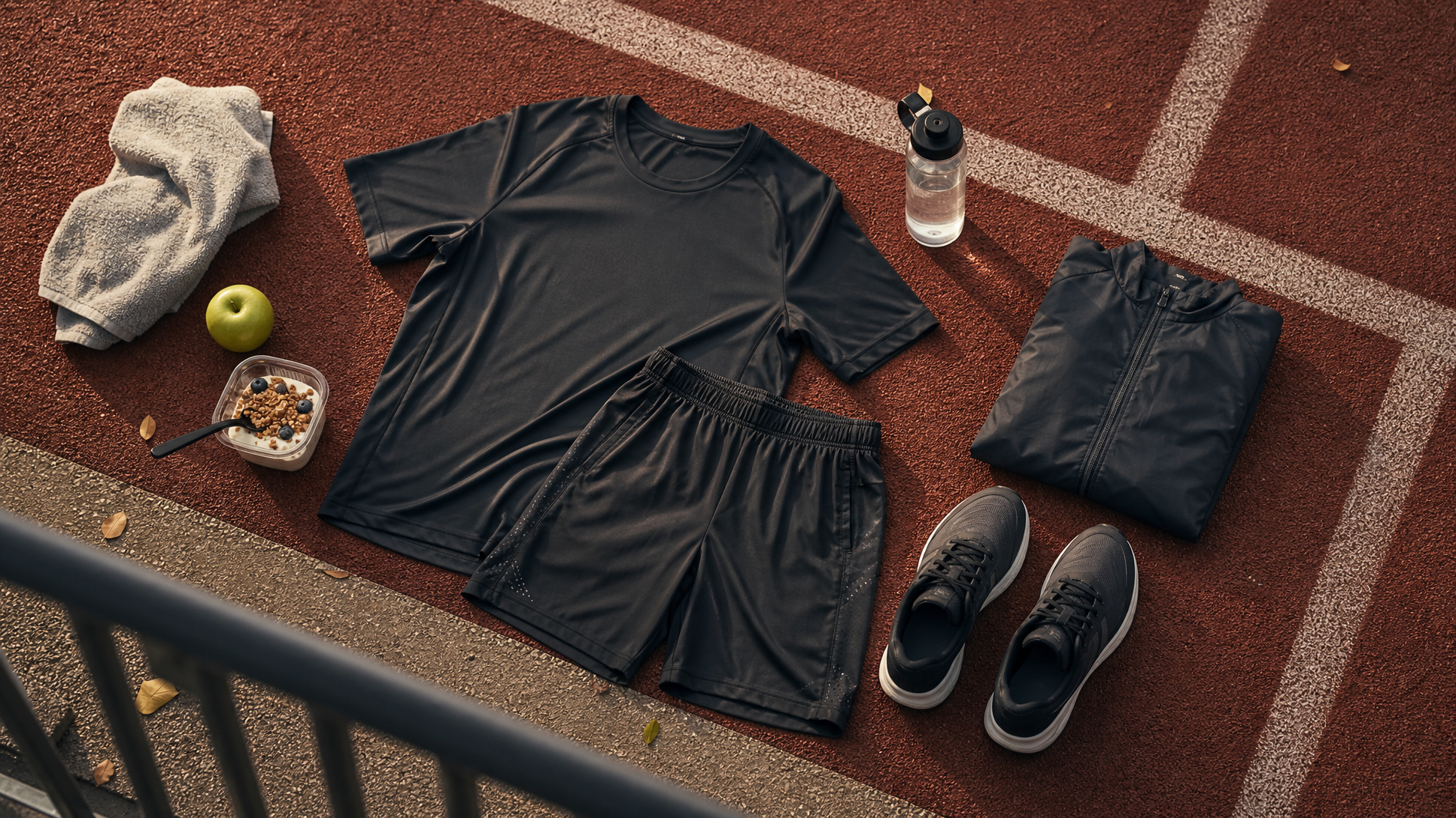
One Kit, Two Seasons
The best off-season training setup is one that doesn't require a separate shopping trip. If your soccer training apparel is doing its job — lightweight, breathable, built for movement — it's already doing the job of running apparel too. The only real investment is a good pair of road shoes if you don't have them, and possibly that outer layer if cold mornings are part of your routine.
If you're looking to refresh your training kit before next season anyway, it makes sense to buy pieces that earn their place year-round. Browse Vizari's training apparel — the kind of gear that works on the pitch in March and on the road in November.
Frequently Asked Questions
Can I wear soccer cleats for off-season running on grass or turf?
Grass or soft turf is much more forgiving than pavement, but cleats still aren't ideal for sustained running. The stud configuration is built for cutting and lateral movement, not forward propulsion, so you'll likely notice discomfort in your feet and calves after longer efforts. For short grass runs of 10-15 minutes, it's not dangerous — but for regular off-season training, a proper running or cross-training shoe will serve you better and reduce the risk of overuse issues.
How many days a week should a soccer player run in the off-season?
Two to three runs per week is a solid target for most recreational and youth players. The goal is to maintain your aerobic base, not to peak for a race. Keep the majority of your runs at an easy, conversational pace, and add one slightly harder effort each week — intervals, hills, or a tempo run — to keep the cardiovascular system sharp. More than four runs a week without a structured plan can lead to fatigue or injury, especially if you're also doing other training.
What's the difference between soccer training shorts and running shorts?
In practice, not much for most off-season runs. Both are typically made from lightweight polyester or similar synthetic fabrics designed to wick moisture. Running shorts sometimes have a shorter inseam and a built-in brief liner optimized for a forward stride, while soccer training shorts are cut a little wider for lateral movement. For runs under an hour at a moderate pace, soccer training shorts work perfectly well. Where you might notice a difference is on longer runs, where the fit and liner design of running-specific shorts can reduce chafing.
Do I need compression gear for off-season running?
Not necessarily. Compression gear can help with muscle support and recovery, but it's not a requirement for casual off-season runs. If you already own compression shorts or socks from your soccer kit, feel free to use them — just pay attention to how they feel after 20-30 minutes of running, since the fit designed for lateral movement can sometimes feel restrictive during a repetitive forward stride. If they're comfortable, keep wearing them. If not, standard training shorts work just as well.
Related News

Sustainable Soccer Gear for Teams and Families: Why Buying Less, More Durably, Is the Real Win
Last spring, a parent on the sideline mentioned she'd bought her daughter three pairs of cleats ...

The Parent's Guide to Buying Soccer Shin Guards That Actually Stay On
Your kid comes off the field after the first game, shin guard dangling from the sock sleeve, the...

The Silk Sleep Mask as a Mental Fitness Tool: Why Darkness and Stillness Belong in Your Wind-Down Stack
You've done the breathwork. You've silenced your phone. You've maybe even lit a candle. But the ...

Do Girls Need Different Soccer Cleats Than Boys? What the Fit Differences Actually Mean
Every season, the same thing happens. A parent walks into a soccer store (or opens a browser tab...

5 Reasons Soccer Apparel and Gym Clothes Are Not the Same Thing (Even When They Look It)
You've done it. Thrown on a pair of gym shorts and a dry-fit tee for a pickup game because your ...