


The Parent's Guide to Buying Soccer Shin Guards That Actually Stay On
Recent post
Your kid comes off the field after the first game, shin guard dangling from the sock sleeve, the other one shoved down inside their sock entirely. You bought the wrong ones — not because you weren't paying attention, but because nobody told you there were meaningful differences to pay attention to in the first place.
Shin guards are the piece of soccer equipment parents most often return or replace mid-season. The shell looked right in the photo, the price was reasonable, and the size said "youth" — what else is there? Quite a bit, as it turns out. Three variables decide whether a shin guard stays put and actually protects: coverage height, shell rigidity, and the retention system. Get those three right and you're done. Get any one of them wrong and you'll be back shopping before the season ends.
Variable 1: Coverage Height
The shin guard has to cover the tibia — the flat bone running down the front of the lower leg — from just below the knee to just above the ankle. Too short and a tackle catches exposed bone. Too long and it digs into the knee joint every time your player bends to sprint, which means it gets pushed down and ignored.
The standard sizing rule: measure the distance from just below the kneecap to the top of the ankle bone. Most brands map that measurement to a size range (XS through XL, or age-based sizing). If your child is between sizes, go smaller — a guard that's slightly short is far better than one that interferes with knee movement. A guard that moves is a guard that doesn't protect.
One practical check: put the guard on the leg, flex the knee fully, and watch whether the top edge bites in. If it does, size down. If there's a visible gap of more than an inch or two between the guard's bottom edge and the ankle, size up.
Variable 2: Shell Rigidity
The hard outer shell is doing the actual impact work — it disperses the force of a cleat or a ball strike across a wider surface area so the shin doesn't absorb it all at one point. But shells aren't all built the same.
Thinner, more flexible shells are lighter and more comfortable for younger players in low-contact recreational leagues. Harder, more rigid shells are worth the slight weight trade-off for older players in competitive leagues where tackles are serious. The foam backing behind the shell matters too — denser EVA foam absorbs more shock; thin foam just adds a layer of comfort without much protective value.
For most youth players in organized leagues, a polypropylene (PP) shell with EVA foam backing hits the right balance. It's lightweight enough that kids don't feel weighed down, and rigid enough to handle a real challenge from an opponent. The Vizari shin guard range includes guards built with exactly this combination — a lightweight PP shell over EVA foam padding — which is why they tend to get praised for that balance of protection without bulk.
Variable 3: The Retention System (This Is the One Everyone Gets Wrong)
This is where most parents make the mistake that leads to returns. There are two main attachment styles, and they are not interchangeable based on preference alone — they suit different age groups and play styles.
Slip-In Guards
These are bare shells with no built-in straps. They go inside a separate compression sleeve or soccer sock, held in place purely by the sock's pressure. They're lighter, lower-profile, and preferred by older and more experienced players who want minimal bulk. The trade-off: if the sock sleeve is even slightly loose, the guard migrates. For younger players who are still figuring out how to put their kit on, slip-ins create a real problem — the guard ends up anywhere but where it should be.
Adjustable-Strap Guards with Ankle Sleeves
These come with an attached fabric ankle sleeve and adjustable straps that wrap around the calf. The guard is secured to the leg independently of the sock, which means it stays put even if the sock slides. For kids under ten, or any player who tends to fidget with their kit, this style is almost always the better call. The ankle sleeve also adds a layer of protection around the ankle joint itself — either integrated into the guard or as a detachable piece, which gives you flexibility as your player moves into more competitive play.
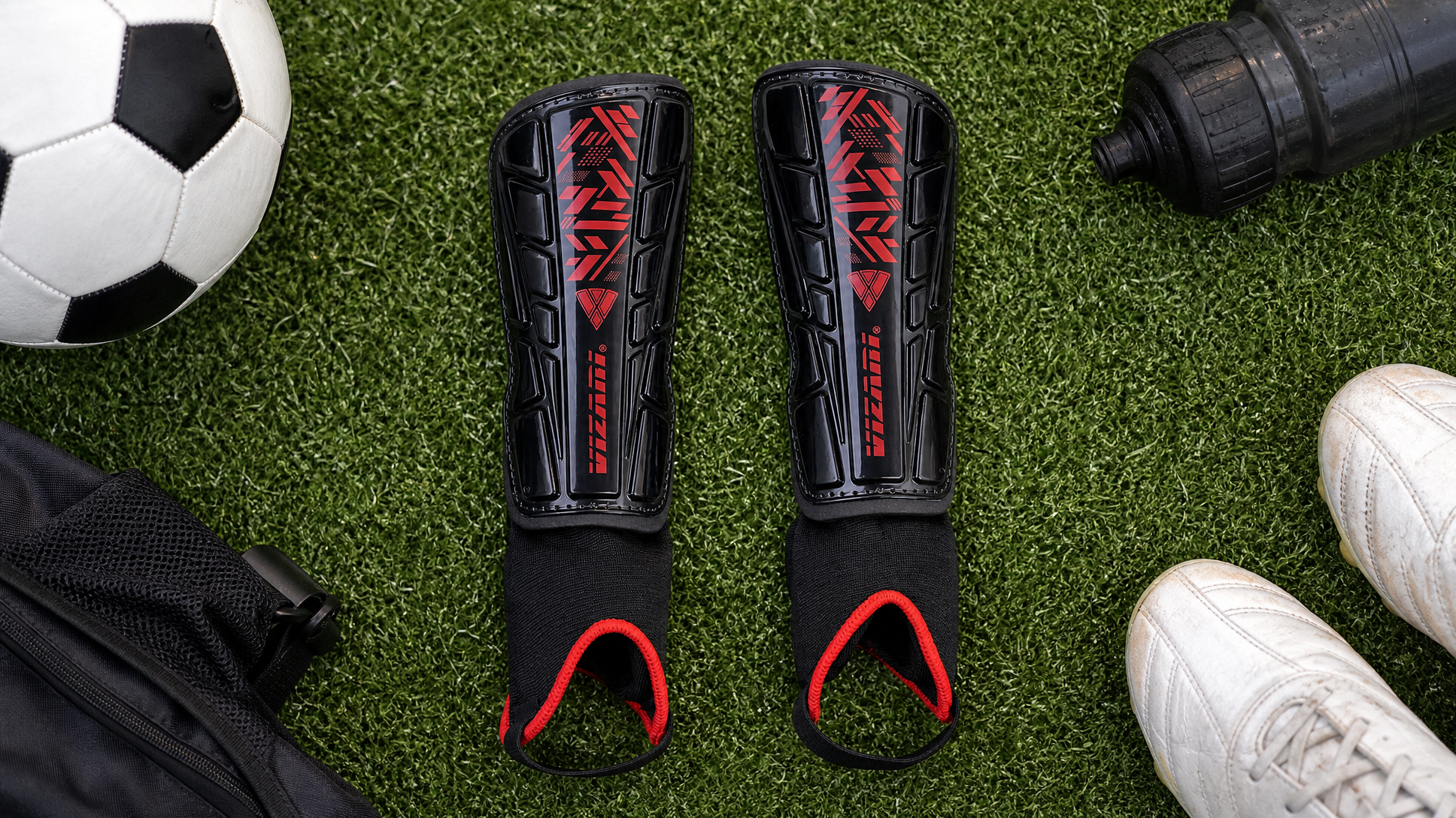
The guards pictured here — Vizari's Malaga — are a good example of the strap-and-sleeve style done well. The ankle loop keeps the sleeve anchored underfoot so it can't ride up, and the straps are adjustable rather than fixed, which matters when you're dealing with calves that change size over a season. The ventilated shell design also means the leg doesn't cook inside the guard during a long training session, which is a real comfort issue for younger players who already resist wearing them.
A Quick Sizing Reference
- Measure the shin, not the player's age. Age-based sizing is a rough guide at best — a tall eight-year-old and a small ten-year-old can need the same size guard.
- Check the fit with the actual sock and boot on. The guard should sit flush against the shin, not gapping at the sides.
- The ankle strap (if present) should loop under the foot, not around the ankle. Under the foot anchors it; around the ankle just adds something to slip off.
- For players new to the game, always start with a strap-and-sleeve style. They can graduate to slip-ins when they've developed the habit of checking their kit.
One More Thing Worth Saying
Shin guards are mandatory in virtually every organized youth soccer league — referees will pull a player from the field without them. That makes them a non-negotiable purchase, but it doesn't mean you need to spend a lot. A well-made guard at a sensible price point, sized correctly and with the right attachment system, will outperform an expensive one that doesn't fit. The gear isn't the variable. The fit is.
If you're outfitting a new player this season, start with Vizari's bestselling shin guards — they cover the range from basic youth styles to guards with integrated ankle protection, so you can match the spec to where your player actually is right now, not where you hope they'll be by spring.
Frequently Asked Questions
How do I know if a shin guard is the right size for my child?
Measure the distance from just below the kneecap to the top of the ankle bone, then match that to the brand's size chart. As a fit check, put the guard on and have your child bend their knee fully — the top edge shouldn't dig in, and the bottom should sit just above the ankle bone. When in doubt between two sizes, go smaller.
What's the difference between slip-in shin guards and guards with straps?
Slip-in guards have no built-in attachment system — they rely on a compression sleeve or tight soccer sock to stay in place. Strap-and-sleeve guards attach directly to the leg with adjustable straps and an ankle sleeve, so they stay put regardless of how the sock fits. For younger players or anyone new to the game, strap-and-sleeve guards are the more reliable choice.
Are shin guards with ankle protection better for young players?
For most youth leagues, yes. Ankle guards — whether integrated into the shin guard or detachable — protect a joint that takes a lot of incidental contact during play. As players get older and move into more competitive settings, some prefer to drop the ankle piece for a lighter feel, which is why guards with detachable ankle protection offer a useful middle ground.
How often should I replace my child's shin guards?
Replace them when the shell shows visible cracking, when the foam backing has compressed and no longer springs back, or when your child has grown enough that the guard no longer covers the full shin. A guard that's been outgrown offers less protection than one sized correctly, so it's worth checking fit at the start of each new season.
Related News

The Silk Sleep Mask as a Mental Fitness Tool: Why Darkness and Stillness Belong in Your Wind-Down Stack
You've done the breathwork. You've silenced your phone. You've maybe even lit a candle. But the ...

Do Girls Need Different Soccer Cleats Than Boys? What the Fit Differences Actually Mean
Every season, the same thing happens. A parent walks into a soccer store (or opens a browser tab...

5 Reasons Soccer Apparel and Gym Clothes Are Not the Same Thing (Even When They Look It)
You've done it. Thrown on a pair of gym shorts and a dry-fit tee for a pickup game because your ...

Firm Ground vs. Turf Cleats in Summer Heat: Does the Surface Change How Hot Your Feet Get?
The heat isn't just coming from the sun
Every summer, parents stock up on water bottles, sunscre...

Soccer Color Trends for 2026: What's Actually Showing Up on Pitches (vs. What's Just Runway Noise)
The Gap Between Trend Forecasts and What Players Actually Wear
Every year around this time, colo...