


Outdoor Soccer Gear Reviews: What Actually Holds Up After a Full Season of Use
Recent post
Here's a pattern every soccer parent and recreational player knows: you buy the gear in August, it looks great, and by November something's cracked, deflated, or falling apart. The shin guard strap gave out. The ball went soft. The pump you threw in your bag three months ago is nowhere to be found.
Out-of-the-box reviews don't catch any of that. So instead of telling you what gear feels like on day one, this post covers what actually holds up across a full outdoor season — the categories worth spending on, the ones where budget gear performs just fine, and what to look for before you buy.
1. Firm Ground Cleats: Where Durability Shows Up First
Firm ground cleats take the most punishment of anything in your kit. Wet grass, dry clay, gravel runoff at the edge of the pitch — the outsole and upper get tested every single session. After a full season, the cleats that hold up share a few traits: a reinforced toe box (the first place recreational players wear through), a secure lace closure that doesn't loosen mid-match, and an outsole where the studs are molded in rather than screwed on.
Screw-in studs sound versatile, but on recreational-level cleats they tend to work loose over time and strip the housing. Molded studs are more reliable for players who aren't switching surfaces constantly. If you're shopping for a youth player who's still growing, prioritize fit and outsole integrity over features — a cleat that fits properly and stays intact matters more than any upper technology.
Browse Vizari's bestselling soccer shoes if you want to see which firm ground options have earned repeat buyers across seasons.
2. Match Balls: The Slow Leak Problem Nobody Warns You About
A ball that holds pressure is a ball you can actually train with. The most common failure mode for outdoor match balls isn't a puncture — it's a slow, gradual leak from a valve that wasn't seated properly at the factory, or a bladder that starts to lose integrity after repeated pressure cycles in cold weather.
What to look for: a butyl bladder (more airtight than latex over time), a machine-stitched or thermally bonded panel construction, and a valve that accepts a standard pump needle without feeling loose. After a full season of outdoor use, a good ball should still hold pressure overnight after inflation. If it's soft by the next morning, the valve or bladder is going.
Check out the full soccer ball collection to compare options across sizes and surface types.
3. Shin Guards: The Gear Most Players Underinvest In
Shin guards are the piece of kit players treat as an afterthought until they take a bad tackle. The durability question here isn't just about the hard shell — it's about the retention system. Velcro straps lose grip after repeated washing. Elastic sleeves stretch out. Ankle guards with thin foam backing compress flat within a few months of regular use.
For outdoor recreational play, a slip-in guard with a separate compression sleeve tends to outlast strap-based designs because there's less hardware to fail. The shell itself — usually polypropylene or a similar hard plastic — is rarely the weak point. It's the attachment system that determines whether a shin guard is still usable in month four.
If you're buying for a youth player, size matters more than people realize. A guard that's too long rides up and shifts during play; too short and it leaves the lower shin exposed. Most brands size by player height, not age — use that guide, not the age range on the box.
See Vizari's bestselling shin guards for options across youth and adult sizing.
4. Portable Ball Pumps: Small Gear, Big Annoyance When It Fails
Nobody thinks about the ball pump until the ball is flat and the pump is broken — or missing. This is the category where cheap fails fastest and where a solid piece of kit quietly earns its keep all season.
The Vizari Portable Ball Pump in black is a good example of what a durable compact pump looks like in practice. It's an all-black, slim-barrel design with a ridged grip section and a coiled spring mechanism at the top of the barrel — visible in the photo and clearly built to handle the compression force without the barrel flexing or cracking. It comes with a separate needle, which is the right call: integrated needles that fold into the barrel tend to snap off or get lost inside the pump body over time. A loose needle you keep in your bag is replaceable; a snapped-off integrated one means buying a new pump.
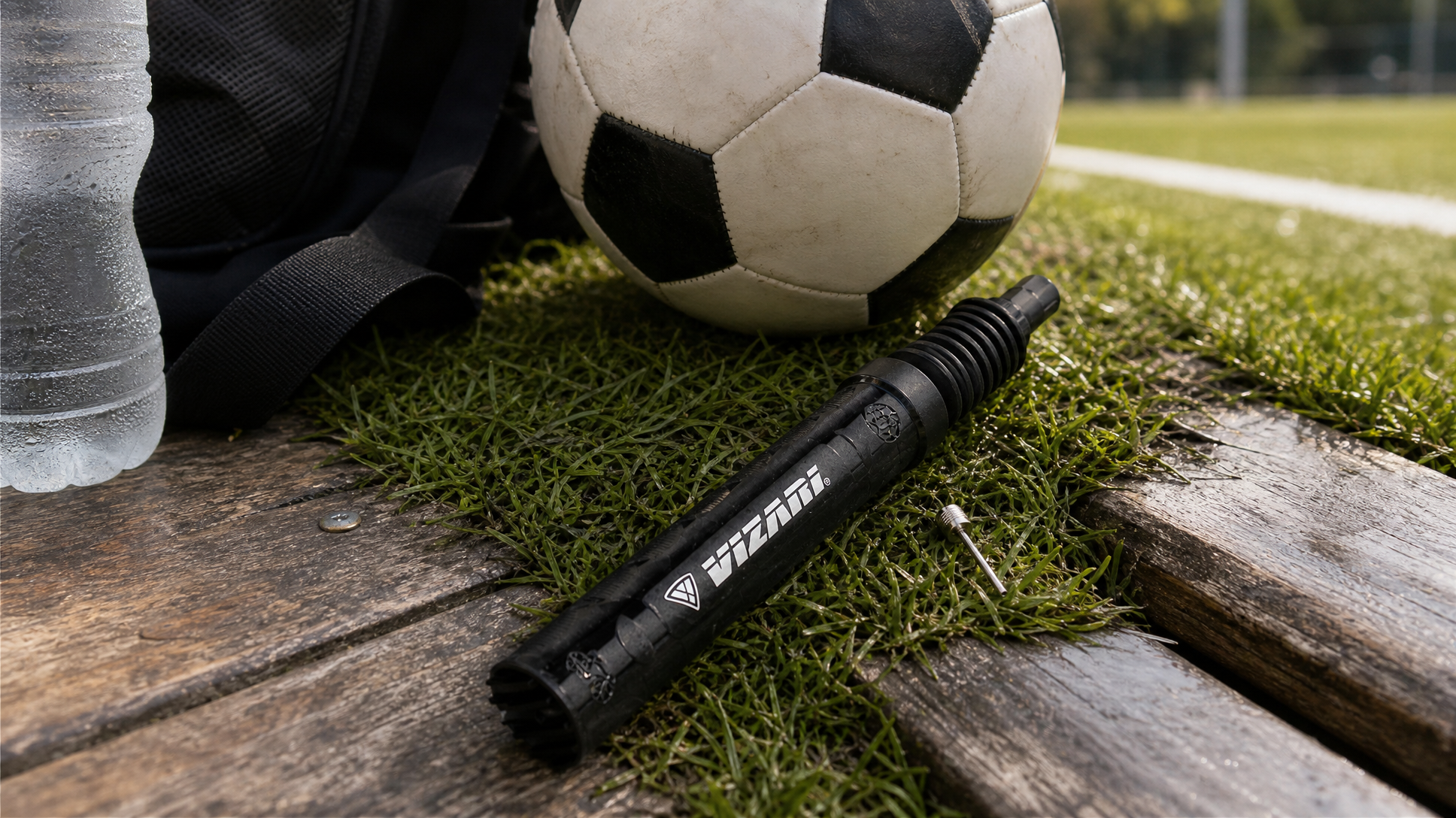
What kills most portable pumps after a season: the needle seat cracks, the barrel seam splits, or the plunger seal dries out and stops creating pressure. Look for a pump with a solid barrel construction (metal or high-density plastic), a standard Schrader/needle valve connector, and a plunger that moves smoothly without wobbling. The Vizari pump checks those boxes in a compact form that fits in a ball bag or backpack without taking up real estate.
One practical tip: after every few uses, pull the needle out and make sure it's clean and straight. A bent needle won't seat properly in the valve and you'll lose pressure on every stroke — most players blame the pump when the needle is actually the issue.
5. Ball Bags and Carry Gear: The Overlooked Season-Ender
A bag that blows out a zipper or drops a shoulder strap in month two of the season is a genuine problem for players and parents who rely on it every week. For outdoor soccer, the stress points are the ball compartment zipper (which gets forced open when the ball is slightly over-inflated), the shoulder straps at the attachment point, and the bottom panel if the bag regularly sits on wet ground.
What holds up: reinforced stitching at strap attachment points, a zipper rated for the volume it's expected to carry, and a base material that doesn't absorb water. What doesn't: thin nylon bases on bags that spend half their life on damp sidelines, and single-layer zipper pulls that fray within a season.
If you're outfitting a whole team or shopping for a player who goes through bags quickly, it's worth spending slightly more on the carry gear than you think you need to — it's the thing that touches every other piece of equipment.
Browse Vizari's soccer ball bags to find carry options built for regular outdoor use.
The Honest Bottom Line
Most outdoor soccer gear fails at the same points: attachment systems, seals, and seams. The shell of a shin guard, the panel of a ball, the barrel of a pump — these rarely give out first. It's the strap, the valve, the zipper, the needle. Shop with that in mind and you'll make better decisions than any first-impression review will lead you to.
Ready to gear up for next season with equipment that's been on real pitches? See Vizari's best-selling outdoor soccer gear — chosen by players, not just product pages.
Frequently Asked Questions
How often should I replace outdoor soccer cleats?
It depends on how frequently you play and the surfaces you're on, but a common sign it's time is when the outsole studs have worn down noticeably, the upper is separating from the sole, or the toe box has broken through. For recreational players training a few times a week, cleats often last one to two full seasons before the structure starts to compromise foot support.
What's the best way to keep a soccer ball properly inflated?
Inflate before each session and check pressure regularly — balls lose air naturally over time, especially in colder weather when air contracts. Store your ball indoors rather than in a cold car boot, and keep a portable pump in your bag so you can top it off at the pitch. A ball that's consistently going flat overnight likely has a valve or bladder issue rather than a puncture.
Are budget shin guards worth buying, or should I spend more?
For recreational and youth players, budget shin guards are generally fine — the hard shell protection is similar across price points. The real difference shows up in the retention system. If you're buying budget, check that the straps or sleeve feel substantial, and be prepared to replace them sooner than a higher-end option. Getting the right size matters more than price for actual protection.
Can I use a portable ball pump for all types of soccer balls?
Yes — most portable pumps use a standard needle that fits the valve found on virtually all soccer balls, whether they're training balls, match balls, or futsal balls. Just make sure the needle is straight and fully inserted into the valve before pumping, and remove it carefully afterward to avoid bending it. A bent needle is the most common reason a pump stops working effectively.
Related News

Shin Guards That Don't Slip, Overheat, or Fall Apart Mid-Game: What to Actually Look For
You've been there: forty minutes into a match, your shin guard has rotated sideways, the sleeve ...

Can You Use Soccer Cleats for Running? Here's What Coaches and Parents Need to Know
The question every soccer parent asks eventually
Your kid just finished a season, the cleats are...

Indoor Soccer Shoes for Kids: How to Find a Pair That Actually Fits a Growing Foot
You order a pair of soccer shoes in your kid's current size, they arrive, and within two weeks y...

Sustainable Soccer Gear for Teams and Families: Why Buying Less, More Durably, Is the Real Win
Last spring, a parent on the sideline mentioned she'd bought her daughter three pairs of cleats ...

Soccer Training in the Off-Season: How to Build a Running Base Without Buying a Second Wardrobe
Every fall, the same thing happens. The season ends, the coach says "stay fit over the break," a...