


How to Build a Sustainable Youth Soccer Kit: Buy Less, Buy Right, Make It Last
Recent post
The Real Reason You're Buying Cleats Twice a Season
Most parents don't replace youth soccer cleats because their kid outgrew them. They replace them because the upper split, a stud snapped off, or the collar started digging into the ankle by week six. The cleat looked fine in the box. It just wasn't built to survive twice-weekly practice on hard ground, plus weekend games, plus the inevitable detour through gravel on the way to the car.
That's not carelessness — that's a mismatch between what the gear was designed to handle and what it actually faces. Buying right the first time isn't about spending more. It's about knowing which features actually determine whether a cleat lasts a full season.
What a Youth Cleat Actually Needs to Survive a Season
The Upper: Where Most Cheap Cleats Fail First
The upper takes the most abuse — ball strikes, lateral cuts, toe drags, and moisture from wet grass. Thin or poorly bonded synthetic materials tend to crack or peel at the flex points, usually around the toe box or the lace eyelets, within the first two months of regular play.
What holds up better is a textured synthetic upper with some structure to it. Texture isn't just aesthetic — it adds micro-reinforcement across the surface, so the material flexes without cracking. The Santos Junior FG Mid-Cut uses a textured synthetic upper for exactly this reason: it gives a little without giving out.
The Outsole: Studs That Stay Put
On firm ground surfaces — natural grass fields that are dry or slightly hard — the outsole is doing serious work every session. The enemy of a cheap FG outsole is stud stress: repeated impact and torque that eventually separates molded studs from the base plate, or cracks the plate itself.
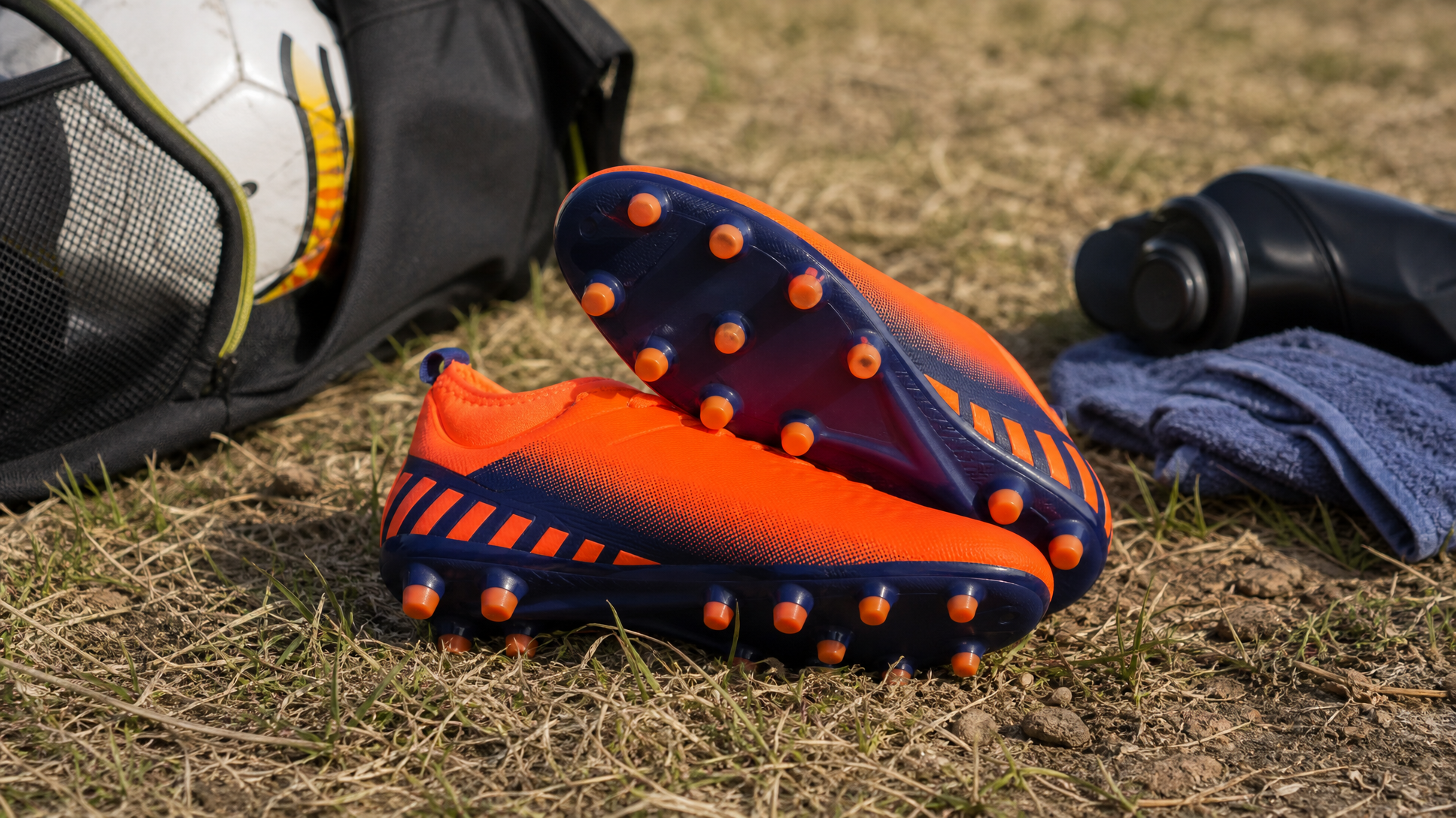
A molded TPU outsole is the right call for this surface. TPU (thermoplastic polyurethane) is rigid enough to anchor the studs under load but has enough flex to avoid snapping under repeated impact. The Santos Junior FG uses a molded TPU outsole with round studs — a configuration well-suited to firm ground because the load is distributed across multiple contact points rather than concentrated on a few aggressive blades that can stress the plate.
Round studs also tend to release from the ground more cleanly than bladed alternatives on hard surfaces, which reduces the torque on the outsole over time. For a kid playing twice a week through a full season, that matters.
The Collar: The Detail Most Parents Overlook
A poorly padded collar is the fastest way to turn a durable cleat into one your kid refuses to wear. Blisters and ankle irritation usually start at the collar, especially during the break-in period. If the collar isn't padded, or if it's made from material that stiffens in the cold, you'll hear about it by week two.
The mid-cut collar design on the Santos Junior FG does two things: it adds ankle support for lateral movements, and the padded construction means it doesn't punish the Achilles during break-in. The built-in sock collar also keeps debris off the field from sneaking inside — a small thing that becomes a big thing when your kid stops mid-game to shake dirt out of their boot.
How to Make the Gear Last: A Few Habits Worth Building
Even well-built cleats shorten their own lifespan if they're stored wet, worn on hard surfaces they weren't designed for, or never cleaned. These aren't complicated habits — they just need to become routine.
- Clean the outsole after every session. Packed dirt in the stud channels changes how the boot grips and puts uneven stress on the base plate. A stiff brush and thirty seconds is all it takes.
- Don't wear FG cleats on turf or concrete. Firm ground studs are designed for natural grass. Wearing them on artificial turf wears the studs unevenly; wearing them on concrete or asphalt accelerates sole separation. Have a separate pair of turf or indoor shoes for those surfaces.
- Dry them properly. Stuffing newspaper inside wet cleats and leaving them at room temperature is still the most effective method. Avoid direct heat — radiators and tumble dryers degrade synthetic uppers and adhesives faster than anything else.
- Check the laces. Fraying laces get replaced for pennies and keep the fit secure. A loose fit means the foot moves inside the boot, which accelerates wear on the lining and reduces the support the collar is supposed to provide.
The Sustainable Kit Mindset: Buy for the Season, Not the Photo
A cleat that photographs well and a cleat that performs through a full season aren't always the same thing. The features that drive durability — upper construction, outsole material, collar padding — aren't the features that show up in a thumbnail. You have to read for them.
The Santos Junior FG Mid-Cut in orange and blue is a worked example of budget gear designed with the right priorities. The bright orange colorway with navy graphic accents looks sharp on the pitch, but the design choices underneath — textured synthetic upper, molded TPU outsole, padded mid-cut collar, adjustable laces — are what make it a sensible buy for a full season of firm ground play rather than a few weeks of it.
Buying less starts with buying right. One pair that holds up through an entire season is always better value than two pairs that don't — regardless of the price tag on either.
Ready to stop replacing cleats mid-season? Shop the Santos Junior FG Mid-Cut — firm ground youth cleats built to last a full season, not just a month. And if you're kitting out a full squad or need shin guards and accessories to go with them, browse Vizari's best sellers for the rest of the setup.
Frequently Asked Questions
What does FG mean on soccer cleats, and how do I know if it's the right surface for my kid?
FG stands for Firm Ground — it refers to natural grass fields that are dry or moderately hard. If your child plays on a well-maintained grass pitch that isn't waterlogged or heavily watered, FG cleats are the right choice. They're not designed for artificial turf (AG or TF cleats handle that) or indoor surfaces (which need flat, non-marking soles).
Using FG cleats on the wrong surface doesn't just wear out the studs faster — it can reduce traction and increase the risk of slipping, so matching the cleat to the surface genuinely matters.
Is a mid-cut cleat better for youth players than a low-cut?
It depends on the player's position and movement style. Mid-cut cleats offer more ankle support and collar coverage, which suits players who make a lot of lateral cuts or who are still developing ankle stability — common in younger age groups. The trade-off is slightly less freedom of movement compared to a low-cut profile.
For most recreational and youth league players, the added support and the debris-blocking collar of a mid-cut design is a practical advantage, not a hindrance.
How often should youth soccer cleats actually be replaced?
A well-made pair of FG cleats used for twice-weekly play should comfortably last a full season — typically around four to six months of active use — before the upper, studs, or insole show meaningful wear. The main reasons cleats get replaced earlier than that are upper cracking, stud loss, or a poor fit from the start.
If the studs are intact, the upper isn't splitting, and the fit is still secure, there's no reason to replace them. Inspect the outsole and collar every few weeks — those are the first places wear shows up.
Can my child wear the Santos Junior FG cleats for practice and games, or should they have separate pairs?
For most youth players at the recreational and amateur level, one pair worn for both practice and games is perfectly reasonable — provided both sessions are on firm natural grass. The key is surface consistency: if practice is on artificial turf and games are on grass, you'd want a turf shoe for practice and the FG cleat for match days.
Rotating between two pairs does extend the life of each, but for families looking to keep costs down, a single durable FG cleat used on the right surface and cared for properly is a practical and sensible choice.
Related News

Shin Guards That Don't Slip, Overheat, or Fall Apart Mid-Game: What to Actually Look For
You've been there: forty minutes into a match, your shin guard has rotated sideways, the sleeve ...

Can You Use Soccer Cleats for Running? Here's What Coaches and Parents Need to Know
The question every soccer parent asks eventually
Your kid just finished a season, the cleats are...

Outdoor Soccer Gear Reviews: What Actually Holds Up After a Full Season of Use
Here's a pattern every soccer parent and recreational player knows: you buy the gear in August, ...

Indoor Soccer Shoes for Kids: How to Find a Pair That Actually Fits a Growing Foot
You order a pair of soccer shoes in your kid's current size, they arrive, and within two weeks y...

Sustainable Soccer Gear for Teams and Families: Why Buying Less, More Durably, Is the Real Win
Last spring, a parent on the sideline mentioned she'd bought her daughter three pairs of cleats ...