


How to Size Indoor Soccer Shoes for Kids Who Are Between Sizes (And Why Getting It Wrong Hurts Their Game)
Recent post
The "Buy a Size Up" Habit Is Costing Your Kid on the Court
Every soccer parent has done it. Your child is hovering between a 4 and a 5, and the sensible-sounding move is to grab the 5, stuff the toe with a little extra sock, and tell yourself they'll grow into it. Three months of wear out of one pair — smart, right?
On a grass field with cleats, you can sometimes get away with it. On a hard gym floor in indoor soccer shoes, you really can't.
Indoor soccer is a tighter, faster game than outdoor. The surface is unforgiving — polished gym floors and hard artificial turf don't give you the same natural grip as grass. Every cut, every quick turn, every burst of acceleration depends on the shoe moving with the foot, not around it. A shoe that's even half a size too big introduces a small but real delay between what your kid's foot does and what the shoe does. That lag shows up as slipping inside the shoe on lateral cuts, laces coming loose mid-game from the foot shifting forward, and blisters forming where the heel lifts and rubs. None of those things are dramatic on their own. Together, they quietly dull a young player's confidence and control.
So let's fix it — starting with a proper measurement at home.
How to Measure Your Child's Foot Correctly (Takes About 5 Minutes)
Foot size isn't static, and it isn't the same in the morning as it is after an hour of running around. Measure in the afternoon or evening when the foot is at its largest, and always measure both feet — most kids have one foot slightly larger than the other. Size for the bigger one.
- Grab a piece of paper, a pencil, and a ruler. Place the paper on a hard floor (not carpet — it compresses unevenly).
- Have your child stand on the paper with their full weight on that foot. Sitting changes the shape of the foot. Standing is the position that matters.
- Trace the outline of the foot — keep the pencil vertical, not angled inward.
- Measure from the back of the heel to the tip of the longest toe. That's your length in centimeters or inches.
- Add a little room — but not too much. For indoor soccer shoes, a thumb's-width of space (roughly half a centimeter) between the longest toe and the end of the shoe is the right target. Enough that toes aren't jammed, not so much that the foot slides.
Write that measurement down before you open any size chart. It's the number that should drive the decision, not the size printed on the shoes they're currently wearing — kids' feet can jump a full size between seasons, and different brands cut differently.
What "Between Sizes" Actually Means for Indoor Soccer
If your measurement puts your child right between two sizes, the instinct is to go up. Resist it.
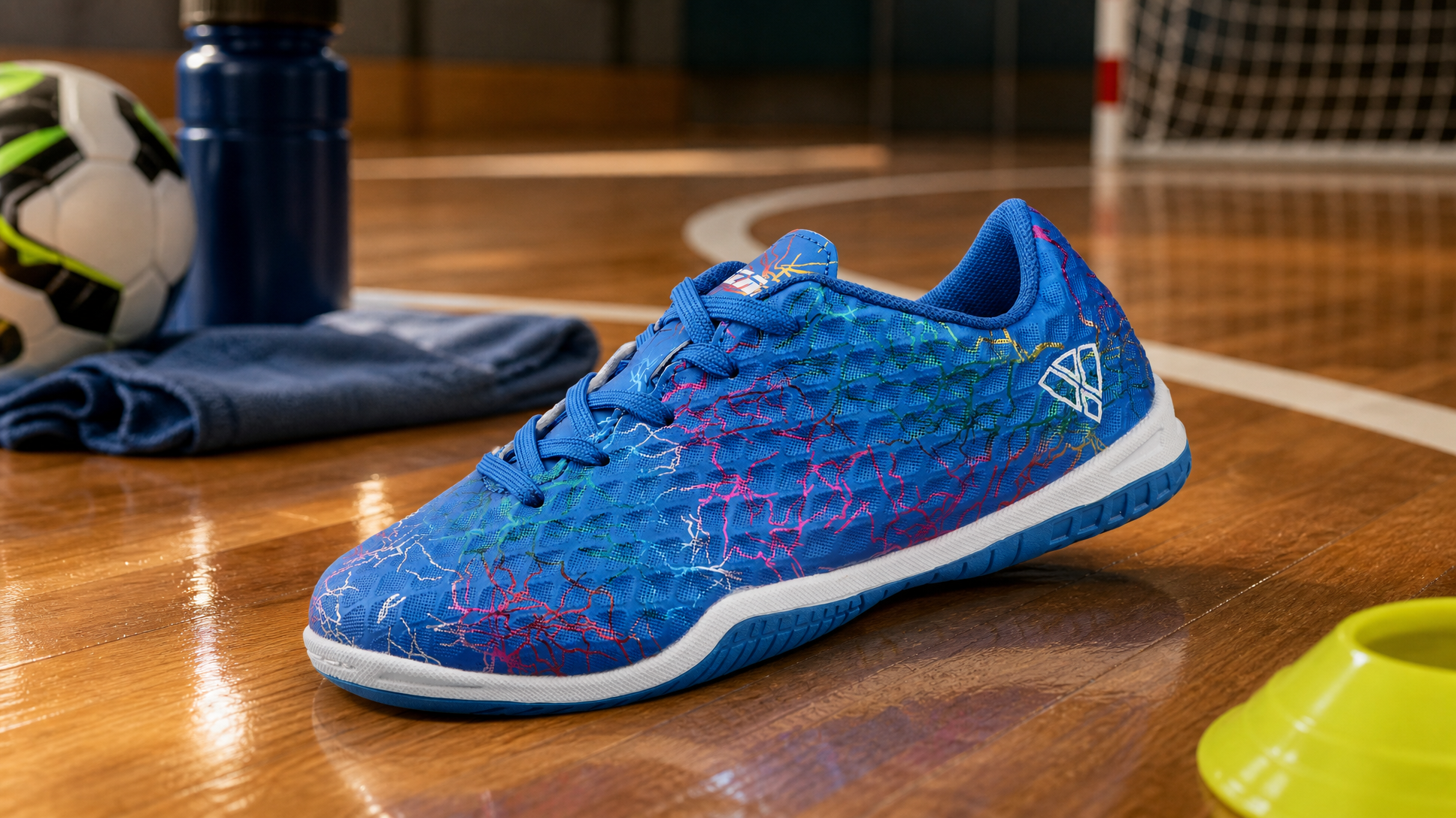
For indoor soccer specifically, a snug fit is almost always the better call. Here's why: the flat, non-cleated rubber sole on an indoor shoe (like the one on the Vizari Zodiac Junior) relies on surface contact for grip. When the foot slides forward inside the shoe, the heel lifts slightly, reducing the amount of sole that's flat against the floor. That's the exact moment a player loses traction on a sharp cut.
Going down a half-size and using a slightly thicker sock is often a better solution than going up. A thicker athletic sock fills the small gap, keeps the heel locked, and still leaves the toe box comfortable. It's a simple fix that most parents never think to try.
If your child is genuinely on the cusp and neither size feels right, check whether the shoe has a lace-up closure — the Zodiac Junior does — because laces give you meaningful adjustability that slip-ons don't. A well-tied lace can compensate for a small fit variation in a way that velcro or elastic can't.
Why the Zodiac Junior Is Built for This Kind of Fit
The Vizari Zodiac Junior Indoor Soccer Shoe is designed specifically for youth indoor soccer and futsal — not adapted from an adult shoe, not a running shoe repurposed for the gym. That distinction matters when you're trying to get the fit right.
The textured synthetic upper is soft and flexible enough to conform to a younger foot's shape without creating pressure points, while still holding its structure through a full game. The lace-up closure lets you dial in the fit at the midfoot, which is where most kids feel looseness first. The soft, flexible midsole absorbs the impact of hard gym floors without adding bulk, so the shoe stays low-profile and responsive. And the non-marking rubber sole is flat and wide — designed to maximize contact with the surface, which only works properly when the foot inside isn't shifting around.
One more practical note for parents: the Zodiac Junior is machine washable. After a muddy practice or a sweaty double-header weekend, that matters.
A Quick Fit Check Before the First Game
Once the shoes arrive, do this before your child wears them on a court:
- The thumb test: Press your thumb into the toe box with your child standing. You should feel about a half-centimeter of space — not a full thumb's width, not zero.
- The heel test: Have them walk a few steps and watch the heel. If it's lifting visibly with each step, the shoe is too big.
- The lace test: Tie the laces properly (double-knot for kids who are active), then have them do a quick side-to-side shuffle. The foot shouldn't slide laterally inside the shoe.
- The toe test: Ask your child if their toes feel jammed when they push forward into the toe box. A little snugness is fine; actual pressure on the nail is too tight.
If it passes all four, you've got the right size. If the heel is lifting, go down. If the toes are jammed, go up. It's that straightforward.
One Last Thing About Kids' Feet and Timing
Children's feet can grow a full size in six months. That's not a reason to buy big — it's a reason to check the fit regularly. A shoe that fit perfectly in September may be too small by February. Build a habit of doing the thumb test every couple of months, especially during growth spurts. Catching a too-tight shoe early is far less disruptive than dealing with a child who's been playing in pain and didn't know how to describe it.
The goal isn't to get maximum mileage out of a single pair. The goal is to make sure every session on the court is comfortable, controlled, and actually fun for your kid.
Ready to find the right fit? Browse the Vizari Zodiac Junior Indoor Soccer Shoes — available in youth sizes and built specifically for the demands of indoor play.
Frequently Asked Questions
Should kids wear the same size in indoor soccer shoes as in regular sneakers?
Not necessarily. Athletic shoes from different brands and categories can fit differently, so it's always worth measuring your child's foot fresh rather than assuming their sneaker size carries over. Indoor soccer shoes also tend to fit closer to the foot than casual sneakers, so some kids find they need a half-size up from their everyday shoe — but measure first and let the numbers guide you.
What socks should kids wear with indoor soccer shoes?
A mid-weight athletic sock works well for most kids. If the shoe fits slightly looser than ideal, a slightly thicker sock can help fill the gap and keep the heel locked without going up a full size. Avoid very thin dress socks — they offer no cushioning on hard gym floors and increase blister risk.
Can the Vizari Zodiac Junior be used on outdoor surfaces?
The Zodiac Junior is designed for indoor surfaces — gym floors, futsal courts, and hard indoor artificial turf. Its flat, non-marking rubber sole is optimized for those surfaces and won't provide the grip or durability needed on grass or gravel. For outdoor play, a firm ground cleat is the right choice.
How often should I check if my child's indoor soccer shoes still fit?
Every two to three months is a reasonable habit, and definitely before the start of a new season. Kids' feet can grow a full size in six months, so a shoe that fit well in the fall may be too small by spring. The thumb test — pressing into the toe box while your child stands — takes about ten seconds and tells you everything you need to know.
Related News

Turf Shoes vs. Indoor Soccer Shoes: How to Pick the Right Pair for the Surface You're Actually Playing On
Every season, players show up to their first futsal session in turf shoes — or hit an artificial...

How to Gift a Full Soccer Kit for the Holidays (Without Getting the Sizes Wrong)
You know they love soccer. You want to get them something they'll actually use. But standing in ...

How to Build a Sustainable Youth Soccer Kit: Buy Less, Buy Right, Make It Last
The Real Reason You're Buying Cleats Twice a Season
Most parents don't replace youth soccer clea...

Shin Guards That Don't Slip, Overheat, or Fall Apart Mid-Game: What to Actually Look For
You've been there: forty minutes into a match, your shin guard has rotated sideways, the sleeve ...

Can You Use Soccer Cleats for Running? Here's What Coaches and Parents Need to Know
The question every soccer parent asks eventually
Your kid just finished a season, the cleats are...